


The right indoor candle holder should fit the usable part of your table—not just the table’s total width. Measure the area left after everyday items are in place, then compare the holder’s full footprint, height and projecting details. A compact pair can suit a side table or narrow console, while a taller sculptural pair needs more visual and physical clearance on a larger surface.
Measure the space you can actually use
Clear the table only as much as you would during normal use. Keep the lamp, tray, books, serving pieces or other items that usually stay there, then measure the remaining width and depth. This gives you a realistic decor zone instead of an optimistic measurement of an empty table.
Mark the proposed footprint with paper or low-tack tape. Check it from the main viewing angle and from the path people use around the furniture. A holder that fits mathematically can still feel crowded if it blocks a lamp switch, competes with a television or sits too close to the edge.
Use a simple table-size checklist
- Small side table: choose one compact holder or a close pair, and preserve room for the table’s main function.
- Narrow console: favour a shallow footprint and keep projecting parts away from the edge and wall.
- Coffee table: keep the arrangement low enough to preserve sightlines and leave space for cups, books or a tray.
- Dining table: allow room for place settings, serving dishes and conversation across the table.
- Large sideboard: a taller pair can create height, provided the base remains stable and surrounding objects have breathing room.
These are layout principles rather than fixed size rules. The furniture’s shape, everyday use and traffic around it matter more than a generic label such as small or large.
Compare footprint and height separately
Footprint answers, “Will it physically fit?” Height answers, “Will it dominate or obstruct the room?” Check both. Also include handles, branches, tails, trays or candle cups that extend beyond the base. When a listing gives two measurements without naming the axes, ask for the complete width, depth and height before purchasing.
For example, the listing for the KRAPHY Kaira metal tealight holder set of two gives dimensions as 7 × 4 inches, but does not identify which axis each number represents. The product photograph shows two matching iron holders with black bases and antique-gold floral forms. It may suit a smaller tabletop arrangement, but confirm the full footprint and height for your intended location.
Choose a taller pair only when the table has room
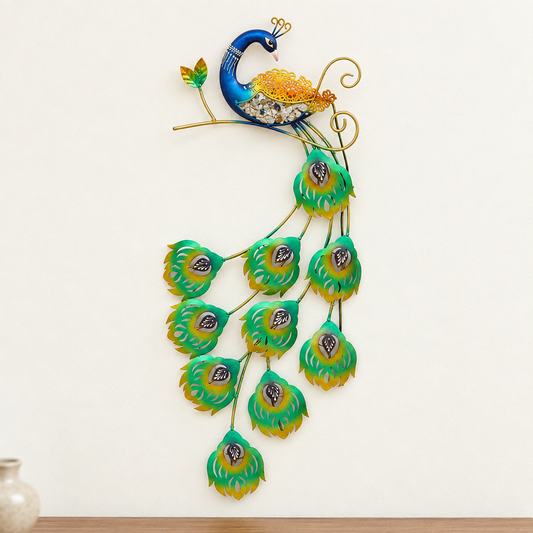
The KRAPHY metal peacock diya candle holder set of two is listed as two metal pieces measuring 13 × 6 inches each. Its photographed peacock silhouettes, raised upper cups and lower diya holders create more vertical presence than a low tabletop accent.
Consider this pair for a wider console, sideboard or dedicated display surface where both pieces can sit together without touching curtains, frames or nearby objects. Do not rely on height alone: confirm how the 6-inch measurement applies and allow clearance around the full painted peacock form and candle-holding areas.
Match the arrangement to the table shape
Round table: use one centred holder or a compact two-piece grouping so the arrangement can be viewed from several sides.
Rectangular console: place a pair together on one side and balance it with one quiet object on the other, or use symmetry when the console is wide enough.
Square side table: keep the holder inside a clear central or rear zone rather than filling every corner.
Long dining table: several low, well-spaced holders may preserve conversation better than one tall visual barrier. Only use products in ways consistent with their listings.
For broader composition guidance, read our living-room table decor guide. If your surface is very narrow, the single showpiece versus pair guide explains how to compare one-piece and two-piece layouts.
Plan the unlit look as well as the evening look
A candle holder spends much of its time unlit, so judge it as a daytime decor object too. Look at its colour, silhouette and finish against the table and wall. A gold-toned holder can connect with a warm-wood surface, picture frame or lamp base without requiring several extra metallic accessories.
Keep the supporting objects restrained. One neutral book, a plain vase or a simple tray is usually enough. If the holder is colourful or sculptural, extra patterned pieces can make a small table feel crowded.
Check practical candle clearance
- Confirm the holder is intended for the candle or diya type you plan to use.
- Keep flames away from curtains, paper, dried flowers, shelves and other heat-sensitive items.
- Use a level, stable surface and keep holders away from table edges and busy walkways.
- Never leave a burning candle unattended, and follow the candle and holder instructions.
- Protect the table surface appropriately and allow holders to cool before moving them.
If the finish is painted, our guide to cleaning hand-painted metal decor explains gentle cleaning principles; always defer to any product-specific care directions.
Make the final decision with a paper template
Cut a paper rectangle using the listed footprint, place it on the table and add clearance around it. For a pair, use two templates rather than one combined rectangle. View the setup while seated and standing, then test whether everyday items still fit comfortably.
Choose by fit before ornament: browse KRAPHY candle holders, compare current product details with your measured table zone, and select the design whose footprint, height and candle format suit the space.


 How to Style Colourful Metal Figurines in a Neutral Living Room
 Useful Handmade Gifts for a Home-Office Desk
 Home Decor for a Rental: Styling Ideas That Avoid Wall Drilling