


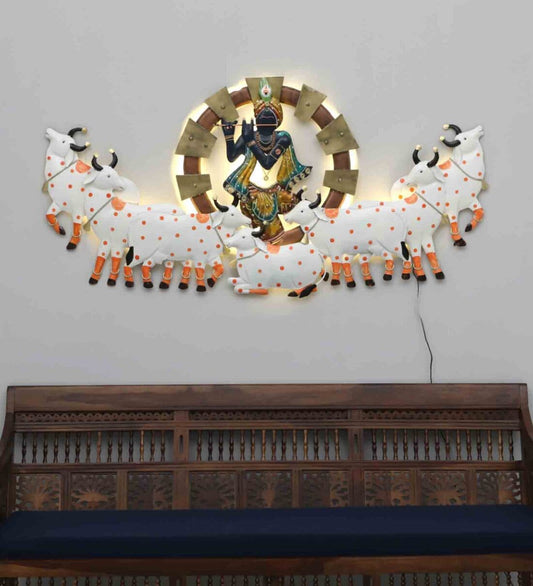
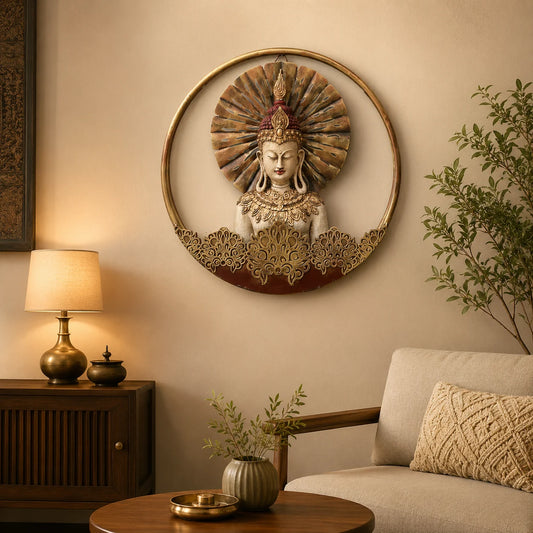

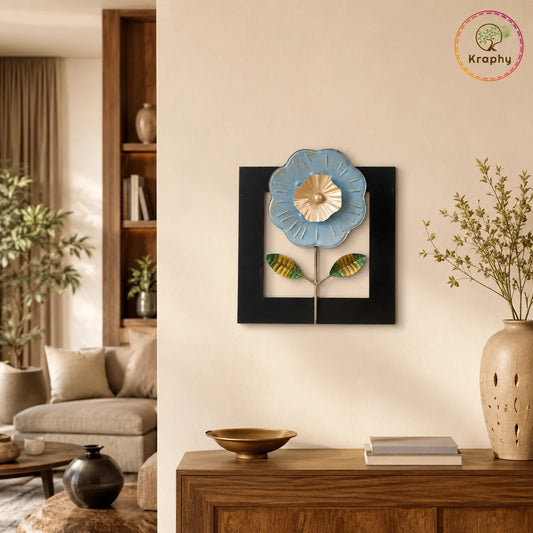


Quick answer: on an open wall, start with the centre of the clock dial around standing eye level—roughly 57–61 inches (145–155 cm) from the floor. Above a console or sofa, judge the full decorative silhouette instead: leave about 6–10 inches (15–25 cm) between the furniture and the clock’s lowest point, then confirm the dial remains easy to read from the room’s main viewing position.
Measure the whole clock, not only the dial
A decorative wall clock may extend well beyond its timekeeping face. Musicians, leaves, flowers, frames or other metal elements change both its visual centre and its physical footprint. Before deciding where the hook should go, record the product’s full width and height. Then locate the hanging point on the back; it may sit above the dial centre rather than directly behind it.
Make a paper template using the full listed dimensions. Mark the dial centre and the hanging point separately. Tape the template to the wall with removable tape, step back and check it from the sofa, doorway and usual walking path. This simple test prevents the common mistake of placing the dial correctly while the lower decoration crowds the furniture.
Use eye level as a starting point on an open wall
For a clock on a wall without furniture beneath it, a dial centre near average standing eye level is a practical starting point. The suggested 57–61-inch range is a flexible design guide, not a rule. Adjust it for the people using the room, the viewing distance and the clock’s shape.
A clock read mainly while seated may sit slightly lower. In a corridor, office or entryway where people usually stand, keep the dial clear at standing eye level. Avoid placing it so high that viewers must tilt their heads, or so low that furniture and passing people interrupt the view.
Above a console: start with the lower edge
When furniture sits below the clock, measure the gap between the console top and the clock’s lowest decorative point. A starting gap of about 6–10 inches usually keeps the two elements visually connected without making them look compressed. Taller lamps, frames or plants may require more space.
Check practical access too. You should be able to change the battery and adjust the time without moving fragile objects or climbing awkwardly over the console. Keep the clock away from swinging doors, curtains and direct contact with décor placed beneath it.
The KRAPHY metal wrought-iron musician wall hanging with clock is listed at 19.5 × 17.5 inches. Its dial sits above two musician figures, with leaves and decorative metalwork spreading around and below it. For this type of design, place the paper template using the complete silhouette and judge dial readability only after the lower figures have enough breathing room.
Above a sofa: balance reading height with the furniture
A clock above a sofa should belong visually to the seating group, not float near the ceiling. Start with the same 6–10-inch gap between the sofa’s highest point and the clock’s lowest point. If the sofa has tall loose cushions, measure from their normal resting height rather than pushing them down.
Then sit in the main seat and confirm the dial is readable. Also check that the decorative clock is not positioned where someone’s head could contact it when standing or leaning back. If the clock needs to move much higher for clearance, it may be better on another wall.
Round and sculptural clocks need different checks
A round clock has a clear geometric centre, so it is relatively easy to align with a console, sofa or wall panel. The KRAPHY antique brown brass round analog wall clock is listed as an 18-inch round brass clock, 2 inches deep and 1.5 kg. Its circular form can be centred directly over furniture, but you should still verify the rear hanging point and choose fixing hardware suitable for the wall and product weight.
A sculptural clock can appear visually heavier on one side or extend below the dial. Centre the entire artwork over the furniture first, then check whether the dial still reads naturally. Do not use the dial alone as the alignment reference.
Choose width before finalising height
Height cannot rescue a clock that is out of proportion with the furniture below it. Use your paper template to compare the complete clock width with the console or sofa. The clock should feel intentionally related to the furniture while leaving visible wall space around the design.
If you are unsure about the wall area, use our wall-space measuring guide. For broader room composition, see the Indian home wall-decor guide.
Check the fixing point and wall before drilling
- Confirm the clock’s exact weight, depth and hanging hardware on the current product page.
- Identify the wall type and use a fixing rated for that wall and load.
- Mark the actual hanging point from the back of the clock, not the dial centre.
- Keep the clock clear of switches, wires, vents, doors and curtains.
- After hanging, check that it sits level and does not rock or lean.
- If the wall, fixing or installation is uncertain, use a qualified installer.
Test the position before you commit
Photograph the paper template from the doorway and main seat. Leave it in place for a day if possible. Check the arrangement in daylight and evening light, because shadows around open metalwork can change how high or heavy the piece appears.
Once the position feels balanced, transfer the template’s hanging-point mark to the wall. After installation, add only one or two quiet objects below the clock so the dial and handcrafted details remain clear. For finish care, follow the product instructions and use our gentle metal-decor cleaning guide where relevant.
Ready to compare shapes and sizes? Browse KRAPHY decorative wall clocks, check the current dimensions and availability, and test your preferred design with a full-size paper template before ordering.


 Krishna Wall Art for a Pooja Room or Living Room: How to Choose
 How to Arrange a Three-Piece Musician Showpiece Set
 How to Choose Indoor Candle Holders for Your Table Size